
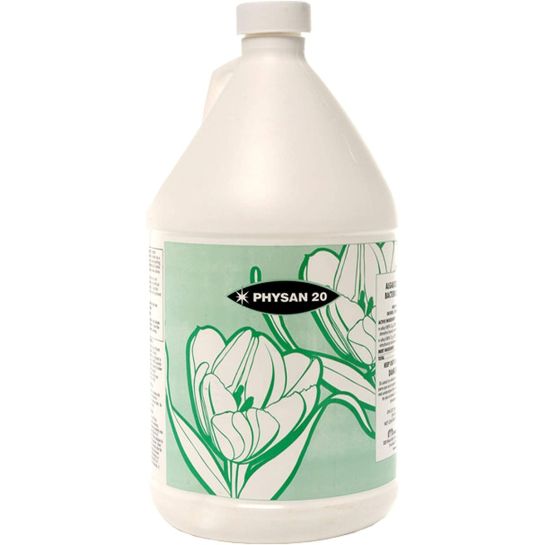
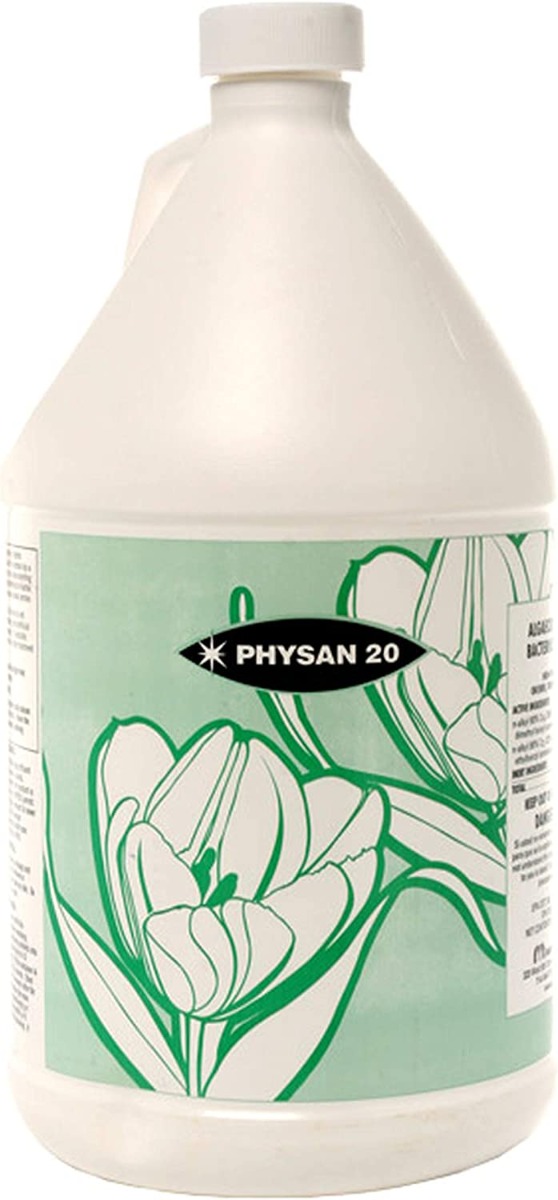
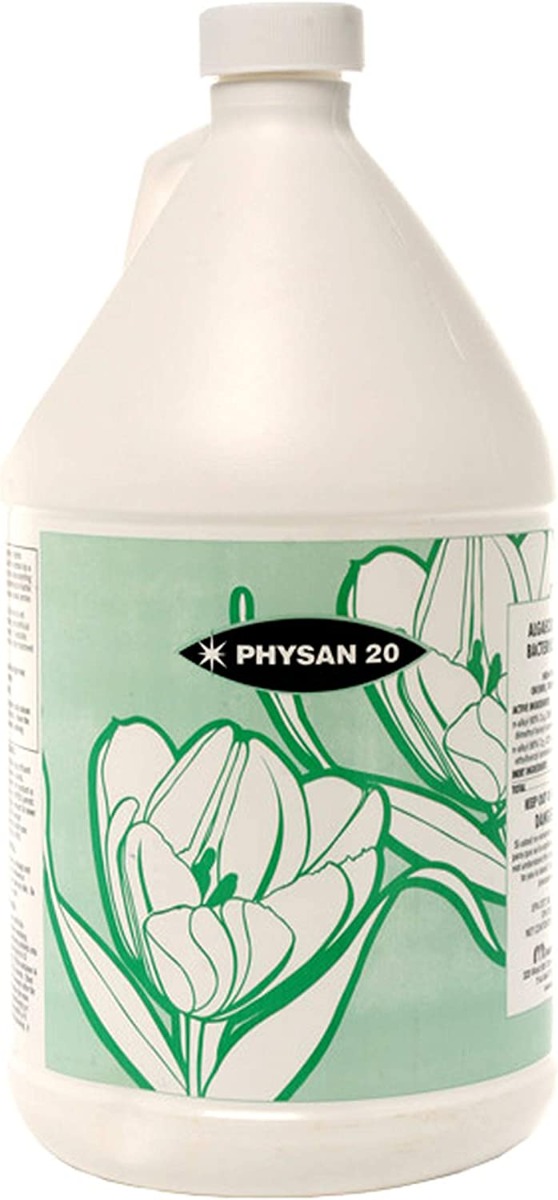
Physan 20 Broad Range Fungicide/Virucide/Algaecide

Currently, there are no documents available for this product.
Currently, there are no specifications available for this product.



| Title | Price | Quantity | In Cart | |
|---|---|---|---|---|
|
PPHY010 Physan 20 Broad Range Fungicide/Virucide/Algaecide - 5 Gallon |
$166.60
MSRP: $199.92 Margin: 20% |
||
|
PPHY011 Physan 20 Broad Range Fungicide/Virucide/Algaecide - 1 Gallon (4/Cs) |
$38.85
MSRP: $46.62 Margin: 20% |
Details
DISINFECTION AND ALGAE CONTROL IN THE GREENHOUSE
THE USE OF PHYSAN 20™ IN IPM
Prevention of the establishment of plant pathogens in the greenhouse is a critical component of any integrated pest management (IPM) program. Industry has concentrated research and investment in developing chemical and biological treatments for plants infected with a variety of pathogens. However, growers and production managers should not underestimate the value of simple disinfection in preventing the development and movement of pathogens throughout the greenhouse. Regular usage of disinfectants labeled for usein the greenhouse can control bacteria, viruses,fungi, and algae, which, if established, can devastate greenhouse crops, or provide food for insect pests (algae for fungus gnats). Thereare many disinfecting products on the market today which are used in the greenhouse. Care should be taken when usingdisinfectants to ensure that the product
selected:
A. is an EPAapproved product labeled for use as a greenhouse
disinfectant
B. is effective against a multitude of plant pathogens and algae
C. isEPAapproved for use on plants as well as hard surfaces
D. has some residual effectiveness over time
PHYSAN 20 as a Disinfectant on Surfaces
PHYSAN 20 Greenhouse Disinfectant isa liquid concentrate product that mixes with water to create a multipurpose disinfecting solution. PHYSAN20 islabeled by the EPA for use on inanimate hard surfaces to control a wide range of bacteria, fungi, and viruses. The product is particularly useful to disinfect cutting tools; control mold and mildew on surfaces such as floors, walls, tabletops, and glass; disinfect work areas and benches; disinfect pots, flats and flower buckets. Dilution rates for these applications are as follows:
Application Dilution Rate
Disinfect Cutting Tools 4 teaspoons Physan per gallon water
Mold/Mildew Control on Surfaces 11,12 Tablespoons Physan per gollon water
Disinfect Work Areas and Benches 1 Tablespoon Physan per gollon water
Disinfect Pots/Flats/Flower Buckets 1 Tablespoon Physan per gollon water
Physan 20 as an Algaecide
Algae isoften present in greenhouses due to the moist and humid environment. Algae growth presents many problems, including unsightly growth on soil surfaces; growth on floors and walkways which present a safety hazard; growth which encourages the presence of fungus gnats. Algae can also impede the function of evaporative cooling equipment. Slime-forming fungus, mold and algae in evaporative coolers can cause odor and accelerate the spread of pathogens throughout the greenhouse. Minimizing the presence of algae has many benefits and should be a critical part of a total disintecfinqproqrorn. Physan 20 is safe to use with fragile evaporative cooling pads.
Application Dilution Rate
Alqoe Control on Walkways 1 Tablespoon Physan per galion water
Alqae Control on Glass 1 Tablespoon Physan per galion water
Evaporative Coolers 1 teaspoon Physan per 15 gallons water
Physan 20 to Control Algae on Soil Surfaces
A particular challenge for growers ispreventing and treating algae on the surface of soil in the presence of plants. Many algaecides are not labeled for use on plants. PHYSAN
20 is labeled for this use. It isalso can be used as a soil drench and has excellent wetting properties.
Application Dilution Rate
Soil drench 1 teaspoons Physan per gallon water
Alqae control on soil 1 teaspoons Physan per gallon water
Physan 20 vs. Chlorine Bleach as a Disinfectant
Many growers recognize the importance of disinfection in the greenhouse. However, many mistakenly believe that chlorine bleach isa cheaper alternative that provides quality disinfecting capabilities. This is not so. Chlorine bleach is not labeled for use as a greenhouse disinfectant by the EPA on a state or federal level. Its use as such can result in citations and or fines upon inspection. Bleach rapidly evaporates when prepared in solution. The half-life of a .5% solution of bleach and water is only 2 hours. Thus the prepared solution must be applied immediately after mixing to be effective. In addition, a contact time of 30 minutes is required for disinfecton.
PHYSAN20 has residual germicidal activity, which means it remains effective for a period of time, particularly on hard surfaces. The solution itself remains active and can be used over time. Its effectiveness can be checked with Physan 20 Test Strips to ensure it remains active. In addition, a 10 minute contact time is all that is required to disinfect. The use of a solution stronger than .5% can cause damage to plastics and metal.
In addition, bleach presents a risk to employees who inhale the fumes or splash the product on clothing.
The diluted PHYSAN20 solution is safe enough to dip ones hands in. It is not a primary eye or skin irritant, and if splashed on clothes will not harm them. The solution is pleasant smelling and requires no special ventilation to use.