
Khemical Sodium Hypochlorite 12.5% - Liquichlor - Bleach

Currently, there are no documents available for this product.
Currently, there are no specifications available for this product.



| Title | Price | Quantity | In Cart | |
|---|---|---|---|---|
|
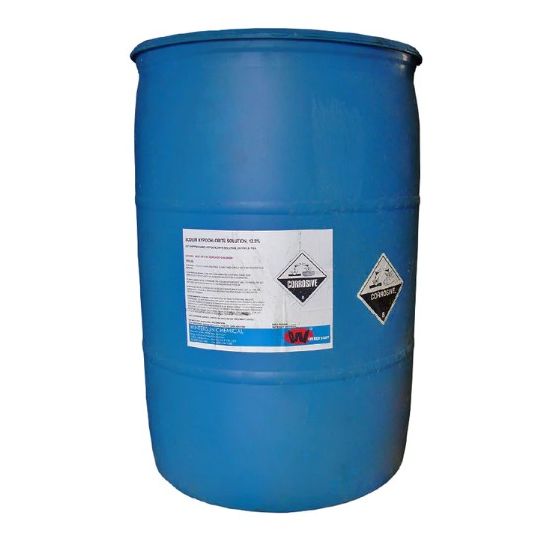
NKH124 Khemical Sodium Hypochlorite 12.5% - Liquichlor - Bleach - 55 gallon (4/Plt) |
$287.79
MSRP: $345.35 Margin: 20% |
Details
Khemical Sodium Hypochlorite 12.5%, also known as bleach, is a powerful and widely used chemical compound that is commonly used for cleaning, sterilizing, and is found in the form of a pale greenish-yellow dilute liquid. It is a chlorine-based disinfectant that is used to kill a wide range of microorganisms, including bacteria, viruses, and fungi.
Common applications for bleach are sterilization and sanitization of crop production areas between crop cycles. Spraying or scrubbing trays, irrigation lines, some equipment, floors, walls, etc. are common usages.
This low cost option is highly effective in the battle against pathogen and other organic pests. Please ensure all safety measures are followed to protect workers and facility equipment.
Sodium hypochlorite is alkaline, inorganic, and anhydrous. The compound is unstable and easily decomposes, releasing chlorine. Bleach is corrosive.
Bleach in solution offers broad spectrum anti-microbial activity and is widely used in agricluture facilities for a varity of applications. Usually, bleach will be diluted into water depending on it's intended application.
Bleach has deodorizing properties which work in conjunction with it's cleaning properties.
Be sure to check compatibility before mixing bleach with other cleaning products.
Use with caution. Keep away from children. It is considered unlawful to sell, use or distribute this product in ways other than as claimed.
This product is shipped as a HAZARDOUS MATERIAL. Sodium hypochlorite 12.5% (Bleach) is classified as an oxidizer.
PROPER HANDLING PROCEDURES FOR OXIDIZERS
- Appropriate personal protective equipment should be worn when working with oxidizers. Wear standard nitrile laboratory gloves, lab coat, and safety glasses/goggles for all work with oxidizers. If working with an oxidizer that is also corrosive, follow PPE recommendations in the SOP for work with corrosives. Consult the Safety Data Sheet.
- If the reaction is potentially explosive, or if the reaction is unknown, use a fume hood (with the sash down as a protective barrier), safety shield, or other method for isolating the material or the process.
- Oxidizers can react violently when in contact with incompatible materials. For this reason, know the reactivity of the material involved in an experimental process.
- The quantity of oxidizer used should be the minimum necessary for the procedure. Do not leave excessive amounts of an oxidizer in the vicinity of the process.
- Use caution when mixing oxidizing agents with flammable or combustible materials for research. Use small amounts to reduce generation of heat and control the reaction.
- Never return excess chemicals to the original container. Small amounts of impurities may be
introduced into the container which may cause a fire or explosion.
PROPER STORAGE GUIDELINES FOR OXIDIZERS
- Store in a cool, dry place.
- Oxidizers should be segregated from organic materials, flammables, combustibles and strong reducing agents such a zinc, alkaline metals, and formic acid.
- Oxidizing acids such a perchloric acid and nitric acid should be stored separately in compatible secondary containers away from other acids.
- Do not store on wooden shelves or in wooden cabinets.
- Do not use corks or rubber stoppers.