
Hormex Rooting Powder





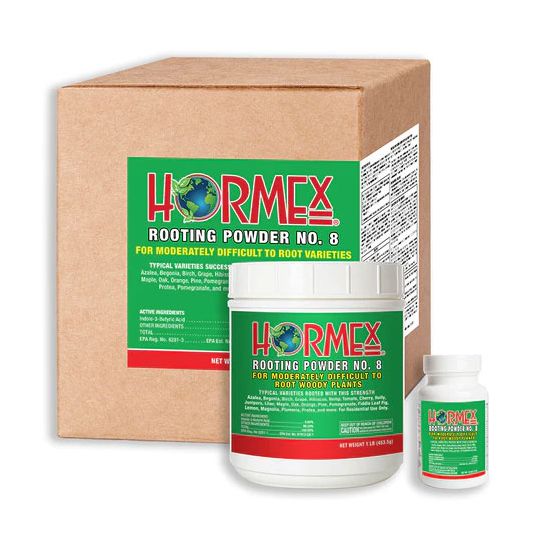
| Title | Price | Quantity | In Cart | |
|---|---|---|---|---|
|
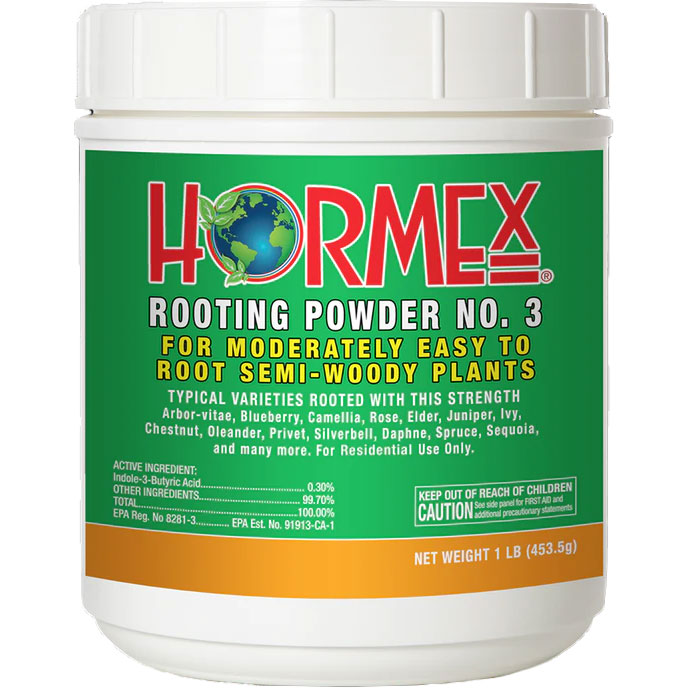
NH014 Hormex Rooting Powder #3 - 1 Pound (12/Cs) |
$36.80
MSRP: $44.16 Margin: 20% |
||
|
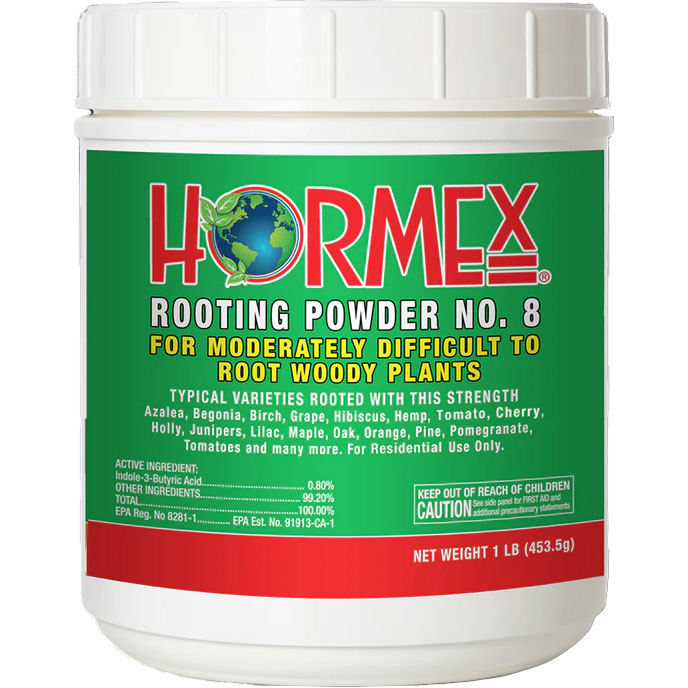
NH018 Hormex Rooting Powder #8 - 1 Pound (12/Cs) |
$49.45
MSRP: $59.34 Margin: 20% |
||
|
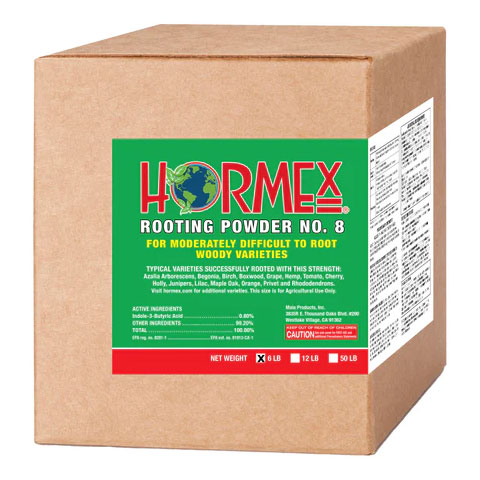
NH019 Hormex Rooting Powder #8 - 6 Pound |
$248.40
MSRP: $298.08 Margin: 20% |
Details
HORMEX ROOTING POWDER
CLONE PLANTS FROM CUTTINGS | ACCELERATED ROOTING
Hormex Rooting Hormone Powder is used to root new plants from cuttings easily. Fine tune your cloning by picking the perfect strength for your plant variety. Over the last 60 years supporting and working with growers we know only one strength doesn't cut it. No pun intended haha! We have researched and tested as many plant varieties as possible to ensure we match up the perfect amount of rooting hormone per plant. One aspect of cloning that is often overlooked is the speed at which the cuttings root. Speed is a huge factor in successful cloning because the faster a cutting roots, the faster it can be moved to the vegetative stage of growth and avoid potential issues. Our rooting powders work great with rockwool, coco, peat moss, soil and all other grow mediums. We use only premium ingredients for the healthiest plants possible. Hormex products are used by some of the most successful growers and have been featured in many national publications over the years. Let's make sure you have the right strength for your plants.
Hormex products have been proven by professionals and university studies to have the highest cloning success rate compared to other methods!
* CLICK HERE TO FIND YOUR PLANT VARIETY
PRODUCT HIGHLIGHTS
FASTEST ROOTING POWDER FOR PLANT CUTTINGS: Hormex rooting hormone powder is a unique product that encourages the natural process of rooting new plants from cuttings. Please check the list of plant varieties and rooting powder strength in the product photos.
SUITABLE FOR ALL GROW MEDIUMS: Accelerate strong and healthy roots with this root stimulator for plants that are excellent for all grow mediums like Rockwool, coco, peat moss, soil, clay pellets, and more. As an added bonus, it also helps prevent root rot and sagging cuttings.
NO BAD STUFF: Our root hormone for cuttings is an excellent powder to use even on the toughest and hard-to-root plants, like juniper, grapes, tomatoes, and more. It is made with no alcohol, dye, or preservatives, which is especially important when plants are for consumption.
EFFECTIVE FOR RAPID ROOT GROWTH: Hormex rooting compound consists of Indole-3-Butyric Acid, a plant hormone ingredient that accelerates root formation. It is used on various plant varieties to promote a healthy root system for flowers, fruits, vegetables and more.
EASY TO USE: Simply snip 3"-6" of the stem and lightly moisten the end with clean water. Dip about 1" of the base in Hormex root hormone powder and place in any plant starter medium. Manage humidity and light for optimal plant growth success.
HOW TO USE HORMEX ROOTING POWDER

As quickly as possible, make cuttings, dip in Hormex Rooting Powder, and plant in your preferred grow medium.
1. Moisten base of cutting with clean water or quickly dip in Hormex Vitamin B1 and Hormone Concentrate. Shake off excess moisture.
2. Dip base of cuttings into Hormex Rooting Powder.
3. Tap cutting to remove excess powder.
4. Plant treated cuttings in rooting media, being careful not to rub off rooting powder when planting.
PRO TIP 1: Remember to keep your grow medium slightly moist but not soaked and keep your new plants warm and in bright light, but out of direct sunlight. Many cuttings will also benefit from added humidity. This can be done by using a rooting cube tray with dome or even a clean clear plastic bag or container with a few small holes. Avoid letting the plastic touch the cutting.
Once the cuttings have developed roots, which can take anywhere from 5 - 12 days depending on the plant variety, replant them in another container with moist potting soil or other grow medium.
PRO TIP 2: To identify whether roots have formed or not, pull lightly on the plants. If they pop right out, they are not ready. If you feel some resistance, go ahead and repot.
PRO TIP 3: Never place unused rooting powder back in container to prevent possible contamination. While not common, it is best to avoid this variable.
When searching for a product it is best to start with reliable agriculture companies as opposed to start-up brands, companies making bold new claims, and expensive versions of a proven solution. For rooting hormones, Hormex has been the leader for over 60 years.
Hormex has 4 products in this category containing varying concentrations IBA with #1 being the lowest and most appropriate for sensitive crops such as leafy greens or basil. From there you have #3, #8, and finally #16 in ascending order and increasing concentrations.
The speed at which cuttings will root is often overlooked but makes a large difference. If you can drop days from your cycle that means less production time for the same result and can unlock substantial savings to the farm.
Hormex rooting powder is suitable for all substrates and growing mediums including rockwool, coco, peat moss, soil, and clay pellets.
The use of Hormex is proven to reduce instances of root rot and other plant health issues that slow down rooting and decrease vigor.
Hormex is easy to use. Snip 3-inches to 6-inches of the stem and lightly moisten the end with clean water or nutrient water. Dip about 1-inch of the base into Hormex rooting hormone powder and transplant into any plant starter medium.
Unlike rooting gels that prevent oxygen from penetrating the stalk, rooting powders provide excellent coverage without disrupting growth and less negative side effects to the crop.
- 1 Gallon of Clonex Gel costs around $300.
- 1 Pound of Hormex #3 costs around $35.
- 12 Pounds of Hormex #3 costs around $262.
The value to quality ratio is unmatched and growers that transition from Clonex realize real savings in product cost, labor, and faster rooting.
Clonex Indole-3 Butyric Acid – 0.31%
Hormex Indole-3 Butyric Acid - #1 – 0.10%
Hormex Indole-3 Butyric Acid - #3 – 0.30%
Hormex Indole-3 Butyric Acid - #8 – 0.80%
Hormex Indole-3 Butyric Acid - #16 – 1.60%
Gels are sticky and make a mess. Employees dipping plants into a gel must either scrape the sides or allow for dripping which can significantly slow down the transplanting process.
How to start: Our suggestion is to try #3 if you were previously using Clonex and happy with the results. At the same time, try experimenting with #8 and #16 as some strains show preference toward increased concentrations of IBA. Most of our customers are using the #8. Figure out which works best for which genetics.
COMPETITIORS
- HydroDynamics International
- Dip’N Grow
- Olivia’s Cloning Gel
The Crucial Role of Rooting Hormone Strength in Plant Cloning Success
Plant propagation through cuttings is a popular and effective method to replicate many species of plants, whether for gardening enthusiasts or commercial growers. One key factor that significantly impacts the success rate of cloning plants from cuttings is the use of rooting hormones. These hormones stimulate root growth, encouraging cuttings to develop into healthy, viable plants. However, not all plants require the same concentration of rooting hormone. This is where the importance of using the correct strength of rooting hormone, such as those offered by Hormex, comes into play. Hormex provides four different strengths suitable for a wide range of plant varieties, ensuring that each cutting has the best possible chance to thrive.
Understanding Rooting Hormones
Rooting hormones, typically containing auxins like Indole-3-butyric acid (IBA) or naphthaleneacetic acid (NAA), mimic the natural growth hormones in plants. They promote quicker root development, increase the success rate of plant cuttings, and reduce the time it takes for a cutting to become a mature plant. By using rooting hormones, growers can more reliably expand their gardens, preserve heirloom species, or produce large quantities of plants for sale.
The Importance of Correct Strength
The necessity of choosing the correct strength of rooting hormone cannot be overstated. Here's why:
- Species Sensitivity: Different plant species have varying sensitivities to rooting hormones. Some plants require a higher concentration to stimulate root growth, while others might need only a minimal amount. Using a concentration that's too high for a particular plant can inhibit root growth or even cause damage to the cutting.
- Optimal Root Development: The correct strength ensures optimal root development. This means not only quicker rooting but also the growth of stronger, healthier roots. Strong root systems are crucial for the uptake of nutrients and water, ultimately affecting the plant's overall health and productivity.
- Economic Efficiency: For commercial growers, using the right strength of rooting hormone is also an economic decision. It ensures that the investment in rooting hormones yields the highest possible success rate, improving efficiency and productivity.
Hormex's Four Strengths
Recognizing the diverse needs of different plant species, Hormex offers four strengths of rooting hormone:
- #1 for soft cuttings: Ideal for most annuals and many herbaceous perennials that root easily.
- #2 for semi-hard cuttings: Suited for perennial and woody plants that require a bit more encouragement.
- #3 for hardwood cuttings: Designed for plants that are generally more difficult to root, including many shrubs and trees.
- #4 for very difficult to root cuttings: Reserved for the most challenging plant species that are notoriously hard to propagate.
This range ensures that whether you're dealing with a delicate herb or a tough shrub, there's a Hormex product tailored to your needs.
The success of cloning plants from cuttings can be significantly enhanced by selecting the correct strength of rooting hormone. This choice affects not only the rate and quality of root development but also environmental impact and economic efficiency. Hormex's range of rooting hormone strengths caters to the specific needs of different plant varieties, making it easier for home and commercial growers to achieve propagation success. Understanding and applying the right concentration of rooting hormone is a small but critical step in the journey of plant propagation, ensuring that each cutting has the best start in life.
Rooting Powder vs. Rooting Gel: Understanding the Advantages
Rooting powder and rooting gel are both commonly used for propagating plants by cuttings. However, rooting powder has several advantages over rooting gel, which make it a preferred choice for many growers.
- Ease of Application and Less Mess: Rooting powder is generally easier to apply compared to rooting gel. The powder form allows for a more controlled and uniform application on the cuttings. In contrast, rooting gels can be messy and sticky, making the application process more cumbersome.
- Longer Shelf Life: Rooting powders typically have a longer shelf life than rooting gels. The gel formulations can expire and deteriorate faster, losing their effectiveness over time. This shorter shelf life can be inconvenient and lead to more frequent replacements.
- Reduced Risk of Disease Transmission: The dry nature of rooting powder can reduce the risk of transmitting diseases between cuttings. Unlike rooting gels, which can harbor bacteria or fungi if not properly maintained, rooting powders are less likely to become a breeding ground for pathogens. This aspect is particularly important for growers who are propagating sensitive or disease-prone plants or plants intended for consumption.
- Cost-Effectiveness: Generally, rooting powders are more cost-effective in the long run. Given their longer shelf life and ease of storage, you can use the same bottle of powder for a longer period compared to rooting gels.
- Simplicity and Tradition: Rooting powders have been used for a long time, and many gardeners prefer them due to their simplicity and traditional use. They are often seen as a more "natural" option compared to the more processed gel formulations.
- Dry Storage and Handling: Unlike gels, rooting powders don't require special storage conditions such as refrigeration. They can be stored easily in a dry, cool place without any special considerations.
In conclusion, while both rooting powder and rooting gel are effective for plant propagation, the powder offers advantages in terms of ease of use, better shelf life, cost-effectiveness, reduced risk of disease transmission, and with Hormex, multiple strengths for all plant varieties. These factors often make rooting powder a more desirable choice for growers and plant enthusiasts.